
You turn 40, and suddenly your body starts whispering things like, “Hey, we might need a bit more support here.”
A little more fatigue. Slower metabolism. Changing hormones. Sound familiar?
The best vitamins for women over 40 aren’t about chasing youth—they’re about fueling strength, energy, mental clarity, and emotional balance as your body evolves.
This guide goes beyond basic recommendations. It’s for women who want clarity, not clutter. Backed by science and enriched with personal insight, here’s everything you need to feel empowered—nutritionally and otherwise.
Why Your Body’s Needs Change After 40
Your 40s mark the start of a biological transition—from pre-menopause to perimenopause and eventually menopause. Estrogen begins to decline, bone density may decrease, and your risk of conditions like heart disease or osteoporosis increases.
According to the North American Menopause Society, these hormonal shifts impact:
- Bone health
- Muscle mass
- Cardiovascular function
- Mood regulation
- Skin elasticity
- Energy and sleep quality
That’s why your nutritional needs change too.
Quick Reference: Essential Vitamins for Women Over 40
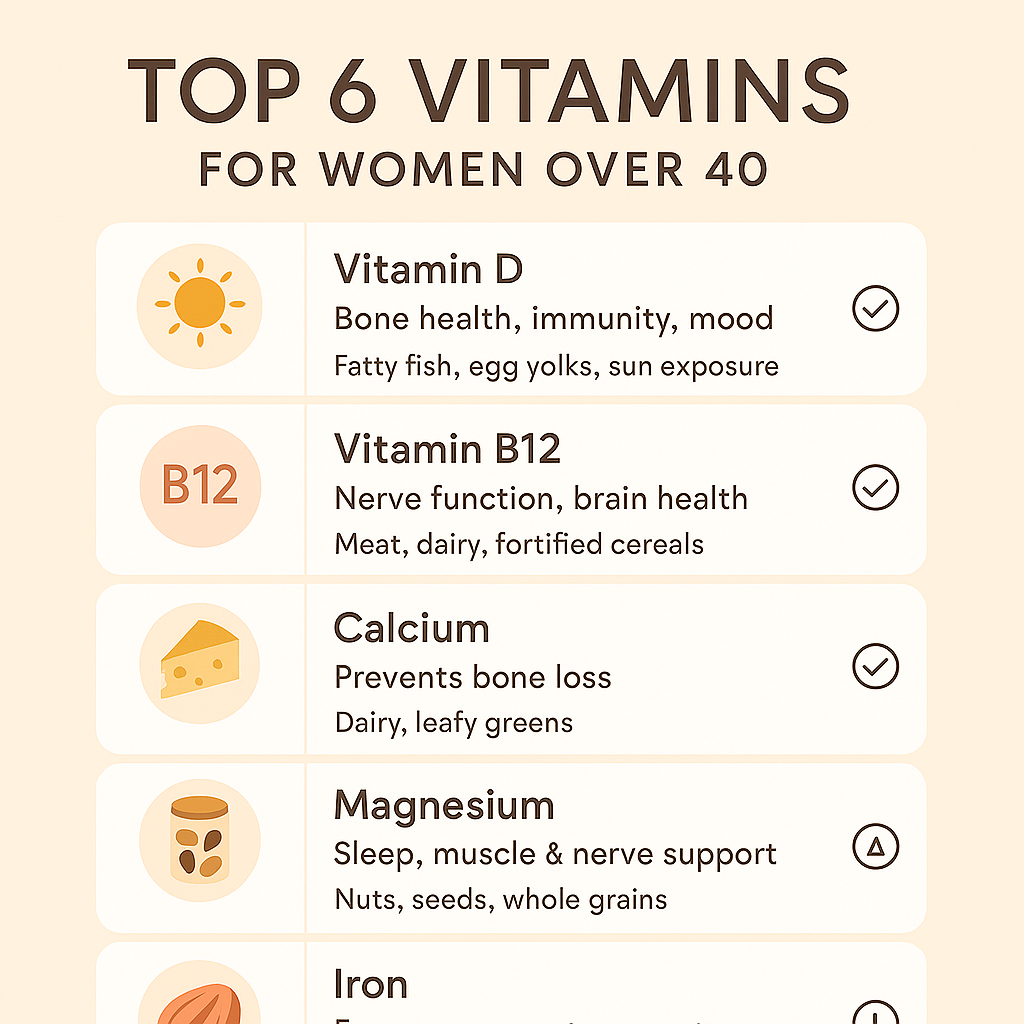
Here’s a table summarizing the key vitamins, their benefits, and food sources:
| Vitamin | Why It Matters After 40 | Best Food Sources | Supplements Recommended? |
|---|---|---|---|
| Vitamin D | Bone health, immunity, mood | Fatty fish, egg yolks, sun | ✅ Especially in low-sun areas |
| Vitamin B12 | Nerve function, brain health | Meat, dairy, fortified cereals | ✅ Often needed with age |
| Calcium | Prevents bone loss | Dairy, leafy greens | ✅ Often with Vitamin D |
| Magnesium | Sleep, muscle & nerve support | Nuts, seeds, whole grains | ✅ For stress and sleep |
| Iron | Energy, oxygen transport | Red meat, beans, lentils | ⚠️ If still menstruating |
| Omega-3s | Heart, joint, and brain health | Salmon, walnuts, flax | ✅ For anti-inflammatory support |
| Vitamin K2 | Directs calcium to bones (not arteries) | Natto, cheese, liver | ✅ If supplementing D & calcium |
| CoQ10 | Cellular energy, heart health | Meat, fish, whole grains | ✅ Especially if on statins |
Deep Dive: The Best Vitamins for Women Over 40
Let’s break down why these nutrients truly matter—and how to incorporate them easily.
🦴 1. Vitamin D: The Backbone of Aging Gracefully
Vitamin D deficiency is rampant—especially among women over 40. Low D is linked to fatigue, mood disorders, immune challenges, and weakened bones.
Aging Insight: Your body’s ability to synthesize Vitamin D from sunlight declines with age. Even if you’re outdoorsy, you may still be deficient.
🔗 Harvard Health recommends at least 600–800 IU per day, though many experts suggest 1000–2000 IU for optimal health.
✅ Tip: Pair Vitamin D with Vitamin K2 to ensure calcium gets directed to your bones—not your arteries.
🧠 2. Vitamin B12: Brain Fog’s Natural Enemy
If you’ve felt unusually tired, foggy, or moody lately, low B12 might be a culprit. As you age, your stomach produces less intrinsic factor, a protein essential for B12 absorption.
Low B12 is linked to:
- Memory issues
- Mood swings and depression
- Nerve tingling
- Anemia
🔗 According to the National Institutes of Health (NIH), women over 40 should consider B12 supplements, especially if they eat less meat or follow a vegetarian diet.
💊 Look for: Methylcobalamin (a more bioavailable form) in lozenges or sublingual tabs.
💤 3. Magnesium: The Unsung Hero for Stress and Sleep
Magnesium doesn’t always make the “Top 5” lists—but it should.
It helps regulate:
- Sleep
- Muscle relaxation
- Nerve function
- Blood pressure
Many women over 40 are magnesium-deficient due to stress, caffeine, or medications like diuretics.
🔗 A Cleveland Clinic study suggests magnesium supplementation may significantly improve sleep quality and ease anxiety.
🍫 Bonus: Dark chocolate is a natural source of magnesium. You’re welcome.
💪 4. Calcium: Still Queen of Bone Support (But Only When Balanced)
Calcium isn’t trendy, but it’s crucial. Around 80% of women over 50 don’t meet daily calcium needs, which raises the risk of osteoporosis.
But here’s the catch: More calcium isn’t always better. Too much, without D and K2, can lead to arterial plaque.
🔗 Mayo Clinic recommends 1,000–1,200 mg per day from a combination of food and supplements.
🧀 Good sources: Cheese, yogurt, tofu, and sardines.
✅ Tip: Space out calcium supplements for better absorption.
🧬 5. Omega-3 Fatty Acids: The Anti-Inflammatory Superstars
Post-40, many women report:
- Achy joints
- Dry eyes or skin
- Lower mood
- Brain fog
These may stem from inflammation and hormonal shifts. Omega-3s, particularly EPA and DHA, help lower inflammation, support brain function, and even reduce menopause symptoms.
🔗 A Cochrane review found that omega-3s may significantly ease mood swings and hot flashes.
🥗 If you don’t eat fatty fish like salmon or mackerel 2-3 times a week, supplements are a smart move.
A Personal Story: What I Learned After Turning 40
When I hit 42, I noticed my energy was crashing around 3 PM daily. I’d wake up tired, crave sugar, and my workouts felt harder.
A simple blood test revealed:
- Low Vitamin D
- Borderline B12 deficiency
- Magnesium depletion
After a few months of focused supplementation (plus tracking my intake via Cronometer), the brain fog lifted. I started sleeping better and my energy became consistent.
💬 Moral of the story? Don’t guess—test and tailor.
Natural vs Synthetic: Does It Matter?
Yes—especially when it comes to absorption.
Look for:
- Whole food-based vitamins (e.g., Garden of Life, MegaFood)
- Methylated forms of B12 and folate
- Fish oil that’s third-party tested for mercury (like Nordic Naturals or Wiley’s Finest)
🔗 Use the NSF Certified or USP Verified labels for extra assurance.
Common Pitfalls to Avoid
Let’s clear up a few myths:
- ❌ More is not always better: Excess iron or fat-soluble vitamins (like A, D, E, K) can be harmful.
- ❌ Multivitamins are not magic pills: They’re often under-dosed or poorly absorbed.
- ❌ If you eat well, you don’t need supplements: Modern farming has depleted soil nutrients—food alone may not be enough.
✅ Best strategy: Combine nutrient-rich foods with targeted supplements based on your lifestyle and lab results.
How to Build Your Supplement Routine
Here’s a sample daily vitamin schedule for women over 40:
| Time | Supplement | Why |
|---|---|---|
| Morning | Multivitamin (or targeted nutrients) + Omega-3 | Boost energy, focus, inflammation |
| Midday | Magnesium (if feeling tense) | Calm nerves, support muscles |
| Evening | Calcium + Vitamin D + K2 | Best absorbed with dinner; supports bone renewal |
| Optional | Iron (separately from calcium) | Only if still menstruating or low on labs |
Final Thoughts: Nourish Your 40s with Wisdom, Not Worry
Aging doesn’t mean decline—it means evolution. Your body’s needs are changing, and your approach should, too.
Understanding the best vitamins for women over 40 isn’t just about filling nutritional gaps—it’s about optimizing for energy, confidence, and longevity.
Start simple. Get your labs. Choose high-quality supplements. And remember: consistency wins.
❓Frequently Asked Questions (FAQs)
1. Do women over 40 really need supplements if they eat a healthy diet?
Even with a balanced diet, many women over 40 don’t get enough key nutrients like vitamin D, magnesium, and B12 due to absorption issues, lifestyle factors, or soil depletion in modern agriculture. Supplements help fill in these gaps and support optimal health.
2. What’s the best multivitamin for women over 40?
Look for multivitamins that are:
- Tailored to women’s changing hormonal and bone health needs
- Contain methylated B12 and folate
- Include vitamin D, magnesium, and iron (if menstruating)
Brands like MegaFood, Thorne, and Garden of Life are highly rated and third-party tested.
3. How do I know which vitamins I’m low in?
The best approach is a comprehensive blood test, which checks for levels of:
- Vitamin D
- B12 and folate
- Iron and ferritin
- Magnesium
- Thyroid function (TSH, T3, T4)
Talk to a healthcare provider or a functional medicine doctor for personalized insights.
4. Can I take all my vitamins at once?
Some vitamins are best taken at specific times:
- Calcium & magnesium: Better absorbed at night
- Iron: Should be taken on an empty stomach, away from calcium
- Fat-soluble vitamins (A, D, E, K): Take with meals containing healthy fats
Spacing them out also reduces the chance of stomach discomfort or nutrient competition.
5. What happens if I take too many supplements?
Over-supplementation—especially with fat-soluble vitamins like A, D, E, and K—can cause toxicity. Too much iron can also be harmful. Always follow dosage guidelines and consult with a doctor before starting high-dose supplements.
6. Are gummies as effective as capsules or tablets?
Gummies can be a good option if you struggle with swallowing pills. However, they often contain added sugars and lower doses of nutrients. Choose brands with minimal fillers and verified absorption.
7. How long does it take for vitamins to work?
It depends on the deficiency and the vitamin:
- B12 and magnesium: Often show improvements in energy and mood within a few days to weeks
- Vitamin D and calcium: May take several weeks or months to show effects on bone and immune health
Consistency is key—track your progress and check labs after 8–12 weeks.
8. Should postmenopausal women still take iron?
Most postmenopausal women don’t need extra iron, unless they have low ferritin levels or anemia. Too much iron can lead to oxidative stress, so test before supplementing.
9. Is it safe to take vitamins long-term?
Yes—when taken appropriately and based on your individual needs, long-term vitamin use can support health and prevent age-related decline. Stick to clinically backed dosages and reevaluate your needs yearly.
10. Can supplements help with menopause symptoms?
Yes. Nutrients like:
- Magnesium and B vitamins support mood and stress
- Omega-3s reduce inflammation and hot flashes
- Vitamin D and calcium protect against osteoporosis
While not a cure-all, supplements can ease many menopause-related challenges when paired with lifestyle changes
What’s Next? Your Action Plan 📝
✅ Book a blood panel with your doctor or functional medicine practitioner
✅ Audit your current diet and supplement routine
✅ Choose 2–3 priority vitamins to focus on (don’t do everything at once!)
✅ Share this post with a friend who’s on the same journey
✅ Subscribe to our newsletter for more women’s wellness insights
💬 We’d love to hear from you: Which vitamins have made a difference in your 40s? Comment below!